AI image generation has moved fast. Tools like Midjourney, DALL·E and Stable Diffusion can now produce polished, on-brand visuals in seconds. ChatGPT has become a part of many people's everyday lives. The kind of imagery that used to require stock photo licences or a professional photoshoot for marketing and promotional print is largely a thing of the past.
That’s a genuine opportunity, and it’s one we want our clients to feel confident using.
But there’s a gap between a great AI image and a print-ready file, and that’s why we, as print professionals, are willing to help.
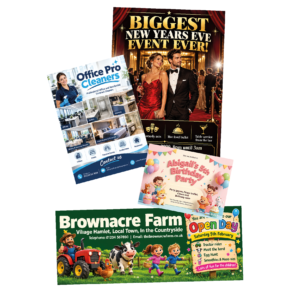
Most AI generators output images at around 1024 × 1024 to 2048 × 2048 pixels. That’s plenty for a website or social media post, but it isn’t good enough for a print run. An A4 sheet alone needs roughly 2480 × 3508 pixels at an acceptable print resolution, and anything larger, such as posters and banners, needs to be larger again.
On top of that, AI tools export in RGB, the screen colour space. Lithographic and digital printing operate in CMYK. Convert carelessly and the colours can shift drastically. The vivid image on screen can come back flat or muddy on paper.
Then there’s the practical stuff: no bleed, no trim marks and no safe margins – all things a print file needs and a generated image simply doesn’t have.
None of this is a reason to avoid AI imagery. It’s a reason to treat it like any other raw asset that needs proper print preparation before it goes anywhere near a press.
Industry-wide, this isn’t treated as a free add-on. Standalone AI upscaling tools charge on a credit or subscription basis, and pre-press artwork preparation can be expensive depending on the complexity of the job.
At Carly Press, we have started building AI-assisted preflight tools and workflows to automatically flag low-resolution artwork and create print-ready files from those lower-resolution originals.
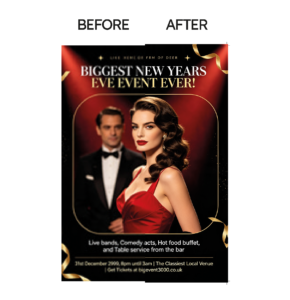
We believe AI image creation is here to stay, and people can utilise the tools available to them, whether free or low-cost, to create their desired image, poster, flyer or banner.
We have invested in developing tools for preflighting, upscaling and preparing those files for print.
We don’t want to penalise people for using AI, so we will take a low-resolution client-supplied image and make it print-ready.
AI imagery is good enough once it has been prepared properly. We can help ensure it looks genuinely professional in print.